




Academic Profile
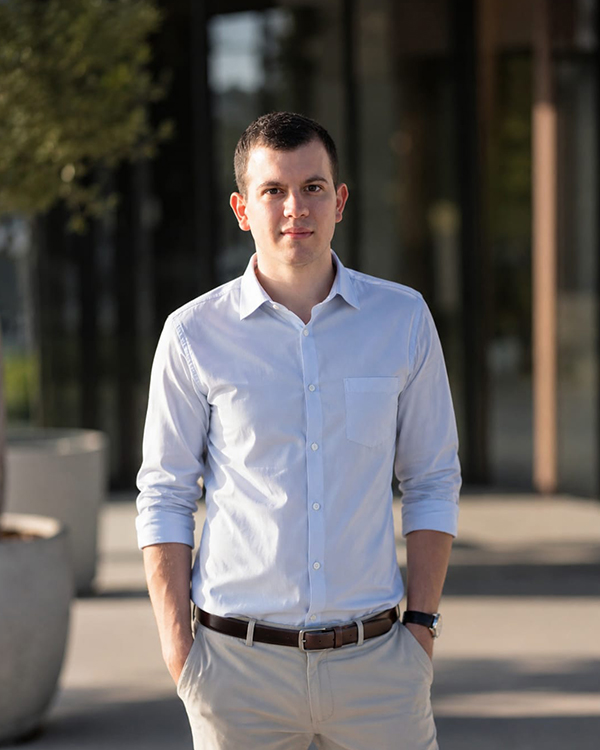
I am a Lecturer in English and Comparative Literature and Course Leader of the BA (Hons) English Language and Literature programme at UCLan Cyprus. My teaching and research interests include English and comparative literature, literary theory, drama, gender studies, and the reception of classical texts in modern cultural and political contexts. My doctoral research focused on the reception of Sophocles’ *Antigone* on the modern Greek stage, examining its relationship with national identity and political discourse. I am also interested in educational innovation, interdisciplinary collaboration, gender equality, social inclusion, and European-funded research projects, with a focus on connecting higher education, research, policy, and society.
QM CV
Andria believes that every discovery begins with a story. As a Lecturer in English and Comparative Literature at UCLan Cyprus, her work explores how narratives shape the way we understand knowledge, identity, and the world around us. In ExQuMe, she demonstrates how storytelling can become a bridge between everyday experience and the abstract world of quantum mechanics, guiding learners through narratives that challenge familiar assumptions and invite them to see reality from entirely new perspectives.
Academic Profile
Athanasios Christopoulos holds a PhD in Virtual Reality Engineering and is a Docent in Mixed Reality in Science Education within the Faculty of Science at the University of Turku, Finland. Dr Christopoulos has authored more than 70 scientific articles in international peer-reviewed journals and conference proceedings and serves as an editorial board member and reviewer for several leading educational technology journals, including IEEE Transactions on Education, the International Journal of Human-Computer Interaction, the British Journal of Educational Technology, and Frontiers in Education. His research sits at the intersection of Human-Computer Interaction, Mixed Reality, Serious Games, Learning Analytics, Instructional Design, and Gamification, with a central focus on how these fields converge to optimise educational outcomes and enrich learner experiences.
QM CV
Athanasios Christopoulos is a Docent in Mixed Reality in Science Education at the University of Turku. His research combines virtual and mixed reality, human–computer interaction, serious games, instructional design, and learning analytics to make complex scientific concepts easier to explore and understand. In **ExQuMe**, he helps learners experience the quantum world through immersive, interactive environments, turning abstract ideas into opportunities for exploration, experimentation, and discovery. **Teleport here to explore the quantum world with Athanasios.**

Academic Profile
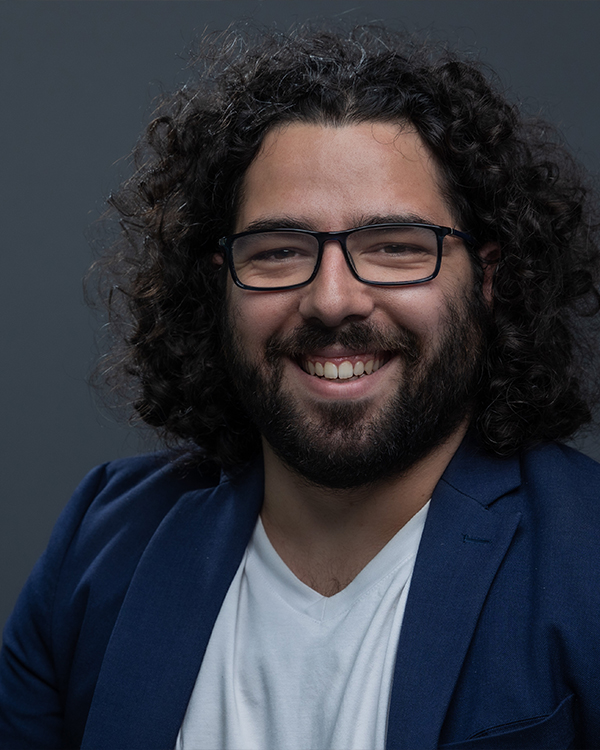
Julien Ramiz graduated from ESTIA in 2020 with an engineering degree in mechatronics and a Master of Science in Mobile Robotics, Embedded Systems and AI with distinction from the University of Salford Manchester. He then joined ESTIA as a research engineer in computer science and robotics. His areas of development are game design, extended reality, and mobile robotics. From 2020 to 2022, he took part in the design of a virtual cockpit for the remote control of drones and UGVs for the maintenance of a wind farm as part of the DURABLE project (https://www.durableproject.eu/).
QM CV
Julien Ramiz is fascinated by the idea that every flash of light carries a story from the quantum world. Just like a photon, that may be tiny, but it is the base of every atom in the universe, Julien combines engineering with digital creativity to build virtual environments where complex scientific ideas become intuitive experiences. With a speciality in game design, extended reality, and immersive interactive systems Julien transforms quantum concepts, from navigating inside a hydrogen atom to following the journey of a photon. His designs turn abstract physics into engaging adventures, confirming his moto, that the best way to understand science is not simply to observe it—but to step inside it. Teleport here to explore Julien's virtual quantum worlds.


